Stop guessing. Here is exactly how much drip coffee bag packaging costs, which materials perform best, and the real MOQ numbers you need to know for 2026.
If you are a coffee roaster, a private label brand owner, or a procurement manager sourcing for a hospitality chain, you have likely hit the same wall we hear about daily: “Why is pricing so opaque?” or “How do I know if this material is right for my roast?”
Transparency is the backbone of a good B2B relationship. Yet, most suppliers treat their pricing, material specs, and Minimum Order Quantities (MOQs) like state secrets.
We are here to flip that script.
This guide breaks down the three pillars of drip coffee bag wholesale—Materials, Pricing Logic, and MOQ—so you can negotiate from a position of knowledge, not guesswork.
Part 1: Material Science (What Affects the Extraction & Taste?)
The material of your drip coffee bag is not just a filter; it is an active participant in the extraction process. Choosing the wrong material can turn a specialty single-origin coffee into a bitter, stalled brew.
Here is the breakdown of the two primary materials used in the wholesale drip coffee bags bulk market:
1. The “Non-Woven” Option (Synthetic Fibers)
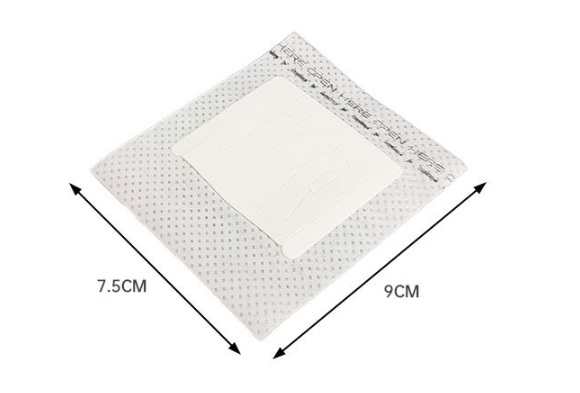
Most wholesale drip coffee bag suppliers offer an “SMS” (Spunbond-Meltblown-Spunbond) or spunlace non-woven fabric.
- Characteristics: High tensile strength, heat-sealable, and resistant to tearing.
- The Flow Effect: Non-woven materials generally have a faster flow rate. This is ideal for darker roasts, which extract quickly and can become bitter if the water sits too long.
- The Drawback: Because it is synthetic, some purists claim it can impart a very slight “plastic” note if the quality is substandard. Always ask for food-grade certifications like FDA or LFGB.
2. The “Paper” Option (Wood Pulp Fibers)
This is the traditional Japanese-style filter paper, made from a premium blend of softwood and hardwood fibers (typically 22gsm to 28gsm for optimal wet strength).
- Characteristics: 100% biodegradable, excellent wet strength, and completely neutral flavor.
- The Flow Effect: Paper filters are denser. They slow down the flow rate, allowing for a longer, more controlled extraction time. This is perfect for light and medium roasts where you want to extract maximum sweetness and acidity.
- The Fines Trap: Paper traps the natural oils (caffeine esters) and fine particles, resulting in a “cleaner” cup, whereas non-woven allows slightly more body to pass through.
💡 Pro-Tip for Professional Buyers: If you are serving Western markets (US/Europe) where organic and clean cups are preferred, lean towards Paper. If you are serving Asian markets where body and “mouthfeel” are prized, Non-Woven is often the preferred choice.
Part 2: The Real Cost of Drip Coffee Bag Packaging
Let’s cut to the chase. We know that drip coffee bag packaging cost is your primary concern. However, in the B2B wholesale space, there is no single “flat price.” It is a formula.
The final price per unit depends on three major factors:
Factor A: Material Type
- Standard Non-Woven: The most cost-effective option. Perfect for high-speed automated packaging lines.
- Premium Japanese Paper: Around +10% to 15% higher than Non-Woven due to material importing costs.
- PLA (Biodegradable) Non-Woven: Around +20% to 30% higher. This is the ultimate “Green” option made from plant starch.
Factor B: Bag Structure
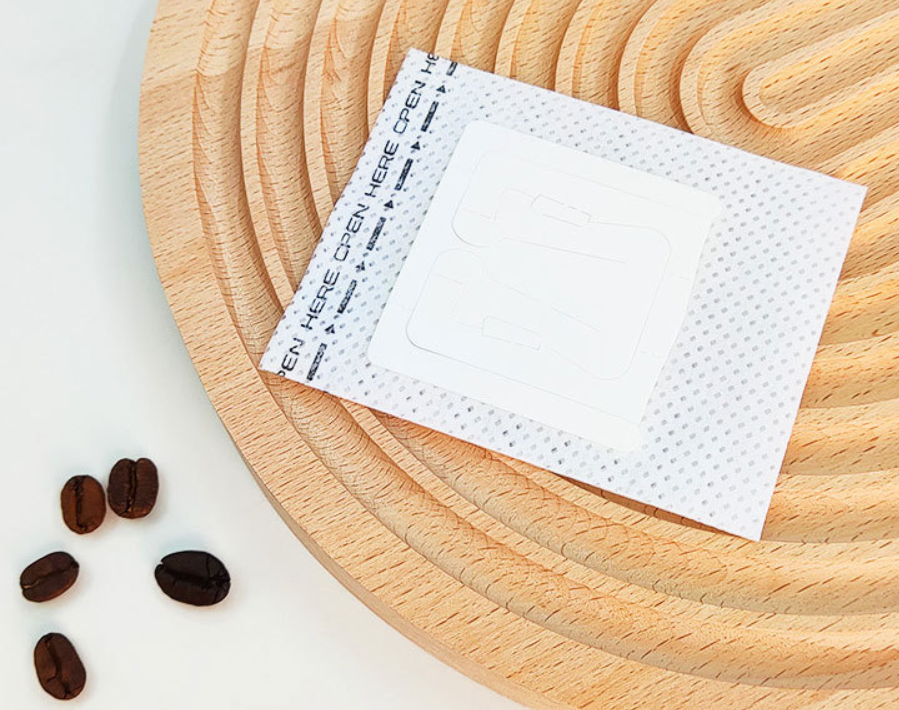
- Flat Bag (Standard Ear-Hang): The most common and cost-effective style. Lower drip coffee bag packaging cost and fastest to fill.
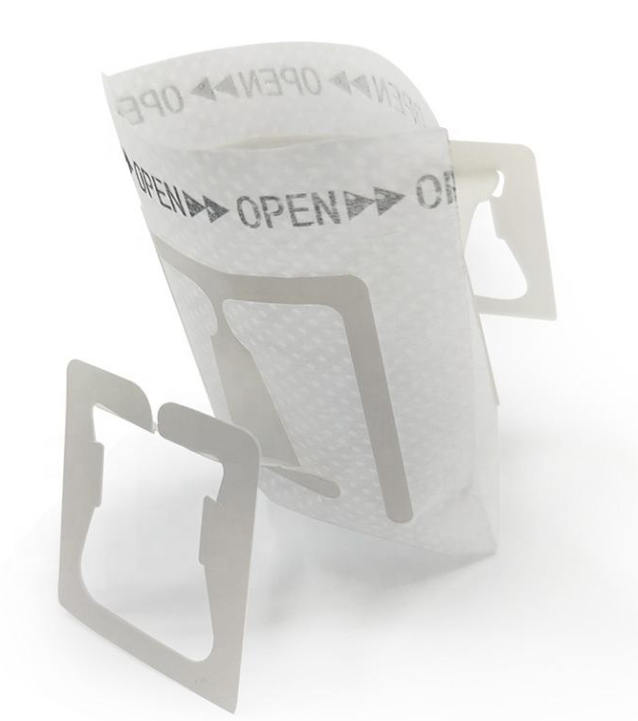
- Triangular / 3D Gusset Bag: More expensive (adds 15%-20% to production costs). The gusset creates more room for the coffee grounds to “bloom,” resulting in a superior extraction. Premium roasters almost exclusively use this structure.
Factor C: Order Volume (The Price Breakers)
This is where volume kicks in. Below is a realistic FOB pricing matrix for drip coffee bag wholesale in 2026:
| Quantity (Units) | Price per Unit (FOB Est.) | Production Lead Time | Sample Policy | Application / Profile |
| 1,000 – 5,000 | $0.12 – $0.18 | 7 – 10 Days | Free Stock Samples | Test runs / Local cafes / Startups |
| 10,000 – 25,000 | $0.09 – $0.12 | 15 – 20 Days | Custom Mockup Available | Regional coffee brands / Roasters |
| 50,000 – 100,000 | $0.06 – $0.09 | 20 – 25 Days | Free Pre-production Sample | National retail chains / Distributors |
| 200,000+ | Negotiable (< $0.06) | 25 – 30 Days | Free Pre-production Sample | Major FMCG contracts / Global brands |
⚠️ The Hidden Cost Warning: Always ask about the “Outer Carton” specifications. Cheap suppliers save money by using single-wall cartons. If your custom retail boxes arrive crushed due to poor outer packaging, you lose the retail sale. We only use double-wall corrugated export-grade cartons.
📥 B2B ACTION CALL: GET YOUR FREE SAMPLE BOX
Reading specs is good, but feeling the paper flow rate is better. We provide Free Sample Packs (containing both Paper, Non-woven, and PLA biodegradable samples) to registered businesses.
Part 3: MOQ – The Minimum Order Quantity “Myth”
If you are a growing brand, the word MOQ (Minimum Order Quantity) can feel like a massive barrier. But in the world of custom coffee filters bulk manufacturing, MOQ is strictly tied to the Printing Cylinder.
The Color Cylinder Rule
To print your custom brand on the outer foil pouch, the factory must engrave a copper cylinder (roller) for each color in your design.
- Standard Printing MOQ: Typically 10,000 to 20,000 pieces per design to cover the machine setup loss.
- The “Low MOQ” Trap: Some suppliers offer a “1,000-piece custom MOQ.” Warning: This usually means they are using cheap digital sheet-fed printing or low-res Flexo. Your unit cost will be 2x-3x higher, and you will not get crisp Pantone-matched colors or metallic foil effects.
Our Solution: The “Split MOQ” Strategy
If you have multiple coffee profiles (e.g., Ethiopia, Colombia, Espresso Blend) but cannot commit to 20,000 units of each, ask us about splitting the MOQ.
How it works: We print 20,000 total outer pouches but split the inner filters or allow you to use a unified outer bag design with different colored labeling stickers. This gives you the high-volume price tier without overcommitting your inventory.
Part 4: The 5 Non-Negotiable Quality Checks for B2B Sourcing
Before you sign any PO (Purchase Order) with a coffee filter manufacturer in China, ensure they meet these strict technical standards:
- Food-Grade Compliance: The material must have FDA, LFGB, or EU 10/2011 certifications.
- Heat Seal Strength: The “peel strength” must be calibrated between 1.5N to 2.5N / 15mm. If the seal is too strong, the customer cannot open it; if it is too weak, it bursts during transit or brewing.
- Filter Integrity (Burst Test): The filter must withstand at least 200ml of hot water at 95°C poured continuously without sagging or tearing.
- Tying Thread & Ear Hooks: Ensure the ultrasonic welding on the paper hangers is clean. Cheap nylon threads can melt under high sealing temperatures; we use high-grade food-safe cotton/paper fibers.
- High Oxygen Barrier: The outer foil packaging must contain a VMPET or AL (Aluminum) layer to achieve an oxygen transmission rate (OTR) close to zero. Without this, your ground coffee will oxidize and lose its aroma within 90 days.
Part 5: The Verdict – Which Sourcing Path Fits Your Business?
- If you are a Specialty Roaster: Choose Premium Wood Pulp Paper with a 3D/Triangular structure. Accept a slightly higher unit cost to preserve your roast’s delicate acidity. Target a 10,000 split MOQ.
- If you are a Cafe Chain or Hotel Supplier: Choose Standard Non-Woven (Flat Bag). It offers the most consistent flow rate, highest packaging speed, and lowest cost. Secure the sub-$0.07 pricing by ordering in 50,000+ bulk.
- If you are an Eco-Friendly / Subscription Brand: Choose PLA Biodegradable Non-Woven. The green marketing angle easily offsets the 20% material premium and appeals directly to modern conscious consumers.
Start Sourcing Smarter Today
We believe in 100% price transparency and flexible MOQ policies. Whether you are testing your local market with 5,000 units or scaling a global chain to 500,000, we provide material certificates, technical flow-rate sheets, and locked-in FOB quotes upfront.
FAQ: Quick Sourcing Answers
Q: Can you manufacture under 2,000 units?
Yes, we can run test batches as low as 1,000 units. However, please note that the pricing will fall under the sample tier ($0.12 – $0.18) due to machine setup times. We highly recommend starting at 10,000 units for the best ROI.
Q: What is the average lead time for custom printed drip bags?
For custom-printed wholesale orders, the standard lead time is 15 to 25 days after the digital packaging artwork is approved and the plate cylinder is made.
Q: What if the drip bags tear on my automatic filling machine?
Tearing is usually caused by a mismatch in heat-seal temperature or dwell time. We provide detailed packaging machine parameters (ideal temperature ranges for our materials) with every shipment to ensure a smooth packaging run at your facility.
0 Comments