The ritual of brewing pour-over coffee often begins by folding a paper filter. Most people think this thin sheet merely stops coffee grounds from entering the cup. However, that is the most superficial explanation.
The filter truly acts as a barrier against two invisible substances: cafestol and kahweol. Coffee beans are rich in natural oils containing these compounds. Whether they end up in your cup depends entirely on your filtration method. This choice directly impacts your cardiovascular health.
Comparing Filtration Media: Metal, Cloth, and Coffee Filter
There are three primary types of coffee filtration: metal, cloth, and paper. Each offers a different level of protection against oily alcohols.
- Metal Filters
Metal filters have the largest pores. They are almost entirely unable to intercept coffee oils. While they preserve the coffee’s full flavor, they have several drawbacks. These include fine sediment, a “heavy” mouthfeel, and the highest associated health risks. - Cloth Filters
Cloth filters sit in the middle ground. They effectively trap fine sediment but are less efficient than paper at removing oils. Their biggest downside is maintenance. They must be boiled, wrung out, and refrigerated after every use. Their performance also changes as the fabric ages. - Paper Filters
For health benefits, paper filters are the gold standard. They achieve the highest removal rates for cafestol and kahweol. They are easy to clean and produce a remarkably “clean” cup. While the flavor may be less “rich,” the cardiovascular benefits make this a worthy trade-off.
Choosing the Right Paper: White vs. Brown
Not all paper filters are equal. Poor choices can introduce a distracting “papery” taste. This flavor comes from wood fibers or residual bleaching chemicals.
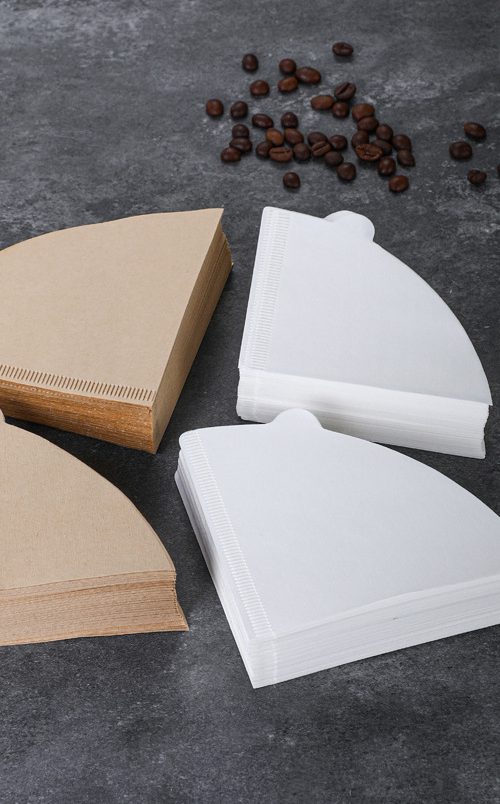
Many assume brown, unbleached filters are more natural. In reality, the opposite is often true. High-quality white filters use oxygen bleaching, a chlorine-free process. They are rinsed multiple times to minimize odors. Unbleached papers often retain more “pulpy” aromas that compromise your coffee’s flavor. Professionals generally recommend oxygen-bleached white filters.
Why the Paper Matters More Than the Cone
In the coffee world, the paper is actually more important than the brewer itself. The filter paper determines extraction uniformity and cup cleanliness. You could spend a fortune on a high-end filter cone, but substandard paper will ruin the result.
Pro-Tip: Filter Cone Shape
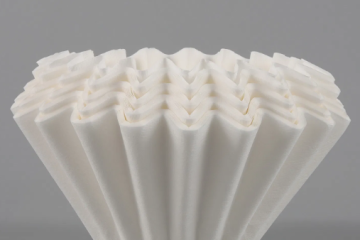
When selecting a filter cone, look for flat-bottom or round-bottom designs. Avoid cones with a sharp, pointed tip. Flat designs allow coffee grounds to circulate freely in the water. Pointed tips tend to concentrate flow, leading to localized over-extraction and uneven flavor.
0 Comments