Selecting the right wholesale coffee filters involves a strategic balance of quality, cost, and logistics. This guide breaks down the procurement process into manageable steps. Consequently, you can ensure your coffee quality remains consistent.
Analyzing Supplier Categories
Different suppliers offer distinct advantages. For instance, specialized manufacturers provide stable quality and deep customization, but they require high Minimum Order Quantities (MOQs). In contrast, primary brand distributors offer better service and stock availability, though customization is limited.
Local wholesalers provide fast logistics and low MOQs; however, their quality control often varies. Meanwhile, generalist intermediaries might offer the lowest prices. Nevertheless, they are rarely suitable for long-term partnerships. For the best results, you should prioritize manufacturers first, followed by primary distributors.
Essential Questions for Inquiries
During the inquiry process, procurement personnel must ask seven vital questions:
- First, what is the Minimum Order Quantity (MOQ)?
- Second, what are the packaging specifications?
- Third, is there currently stock available?
- Fourth, do you support sample testing?
- Fifth, does the quote include taxes and shipping?
- Sixth, what is your return and exchange policy?
- Seventh, can we sign a formal procurement contract?
The Scope of Customization
Customization goes beyond just logos. Specifically, it involves three main categories: packaging, dimensions, and material. Packaging customization involves printing logos on food-grade inner bags. Furthermore, dimension fine-tuning ensures a perfect fit for non-standard cones by adjusting seam depth.
Material customization is the most technical aspect. For example, you can choose bleaching methods like chlorine or oxygen bleaching. Additionally, you can adjust thickness, basis weight, or pulp ratios. Functional changes allow for faster flow rates. Specialized papers can also be developed for dark roasts. However, these services typically involve mold fees and longer lead times.
Strict Sample Testing Protocols
One inviolable rule exists: never buy in bulk without testing. Therefore, you must follow four mandatory steps to ensure performance.
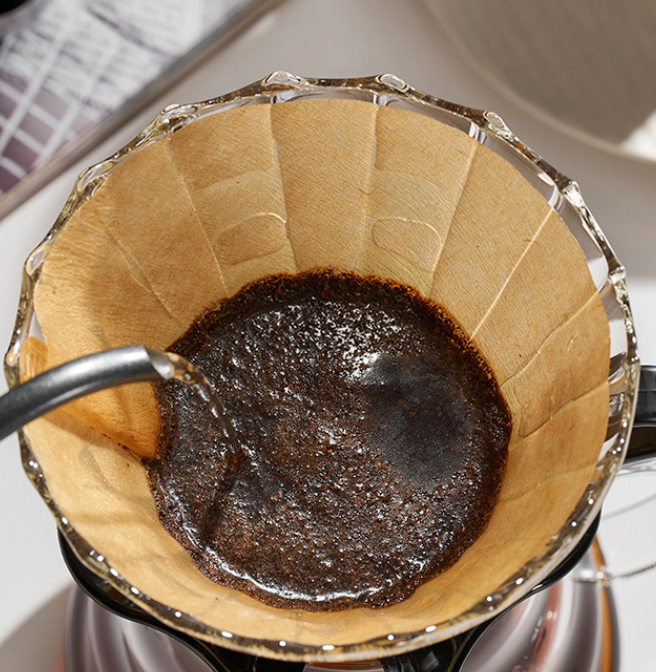
- The Fit Test: Place the folded paper in a cone. It must fit snugly. Otherwise, gaps cause “channeling,” which ruins the extraction.
- The Odor Test: Rinse the paper with hot water. Next, smell and taste the runoff. If it smells like chemicals, reject the batch.
- The Flow Rate Test: Compare the sample against your current paper. If the time deviation exceeds 10%, it is a failure.
- The Wet Strength Test: Soak the paper for five minutes. After that, agitate it with your fingers to ensure it does not tear.
Cost Calculation and Logistics
Don’t just look at the unit price. Instead, calculate the comprehensive cost. This formula includes the purchase price, shipping, and the cost of defects. Because filter paper is bulky, shipping is often expensive. Thus, priority should be given to local suppliers.
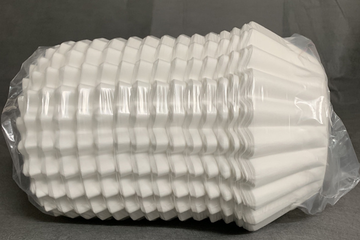
Packaging must also meet strict safety standards. For instance, inner bags must be heat-sealed polyethylene. Similarly, outer cartons must resist moisture. Always ensure the packaging lists the production date.
Inventory Management and Backup Plans
To maintain a steady supply, use a safety stock formula. Specifically, calculate Daily Consumption × Lead Time × 1.5. Start with a two-month trial order. Once the partnership is stable, you can move to three-month cycles.
Risk Management Strategies
In addition, always have a backup supplier. Your primary source should handle 80% of the volume. Meanwhile, use a secondary source for the remaining 20%. This strategy protects you from stockouts. Moreover, it gives you leverage during price negotiations. Ultimately, professional procurement prioritizes testing and quality over the lowest price.


0 Comments