In the specialty coffee sector, the V60 dripper is an icon of precision, but its performance is entirely dependent on the media inside it. For professional coffee roasters and equipment distributors, sourcing from a specialized coffee filter paper manufacturer is a strategic move to ensure brew consistency across global supply chains. When you purchase wholesale coffee filter paper, you aren’t just buying paper; you are buying a controlled extraction variable. This guide delves into the technical specifications—thickness, fiber composition, and flow rate—that determine whether a filter enhances a bean’s profile or creates a bottleneck in the brewing process.
1. Paper Thickness and Density (GSM)
Thickness, measured in Grams per Square Meter (GSM), is the primary regulator of heat retention and physical durability.
- Standard vs. Thick: Most standard V60 filters range between 40-50 GSM. Thicker papers (above 55 GSM) offer superior structural integrity, preventing the filter from collapsing or tearing when agitated during high-volume commercial brewing.
- The B2B Pain Point: Thin, low-quality papers often “clog” because the fibers are too loosely packed, allowing fine coffee particles to migrate and block the pores. As a professional supplier, we focus on high-density fiber alignment to maintain structural strength even when fully saturated.
2. Material Composition: The Science of “Crepe”
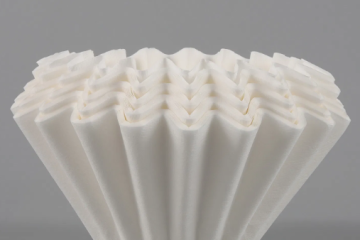
The texture of a V60 filter—known as the “crepe”—is achieved through a specialized drying process that creates ridges and valleys on the paper surface.
- Two-Sided Crepe: High-performance filters feature creping on both the inside and outside. This increases the total surface area, allowing for a faster flow even as the coffee bed settles.
- Fiber Purity: We utilize 100% virgin wood pulp. Unlike recycled fibers, virgin pulp provides long, strong fibers that ensure the filter remains taste-neutral. For B2B buyers, this translates to a “clean cup” that allows the roaster’s unique flavor notes to shine without “woody” interference.
3. Understanding Flow Rate and Pore Size
For a head barista or a brand owner, the “draw-down time” is the most critical metric. The flow rate is determined by the pore size distribution within the paper.
- Fast Flow (High Porosity): Ideal for light roasts and complex, acidic coffees. It prevents over-extraction and bitterness.
- Slow Flow (Controlled Porosity): Better suited for medium-to-dark roasts where a slightly longer contact time is desired to develop body and sweetness.
4. Why Consistency is the Ultimate B2B Metric
The greatest challenge for a wholesale coffee filter paper buyer is batch-to-batch variation. A millimetre difference in the fold or a 2-second difference in the flow rate can ruin a cafe’s standardized recipe.
- Our Quality Control: As a leading manufacturer, we employ automated precision cutting and rigorous air-permeability testing. This ensures that the 10,000th filter performs exactly like the first.
Selecting the right V60 filter is a balance of physics and sensory science. By focusing on GSM density, double-sided creping, and pore-size consistency, you protect the integrity of your coffee brand. Partnering with a dedicated coffee filter paper manufacturer allows you to customize these variables to match your specific roast profiles. If your goal is to provide a world-class brewing experience, investing in high-quality wholesale coffee filter paper is the most cost-effective way to ensure every cup is a masterpiece of extraction.
0 Comments