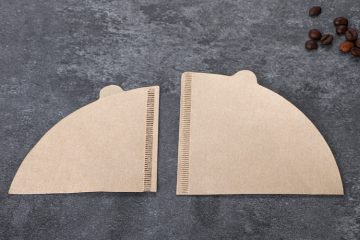
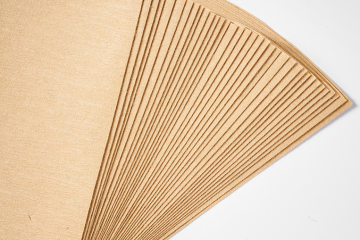
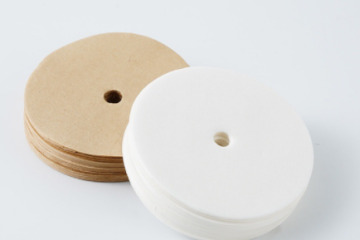
Many coffee shops have started placing filter paper at the bottom of their espresso bowls when making Americanos. This practice isn’t superfluous; it’s for precise control of the flavor profile.

The reasons behind this can be summarized as follows:
- Filtering out fine coffee grounds for improved clarity
The pores of an espresso bowl cannot completely block extremely fine coffee grounds. These fine grounds will enter the espresso, especially noticeable in Americanos—because they aren’t masked by milk.
The impact of fine grounds:
They create a slight grainy and ground texture, affecting the purity of the flavor.
In Americanos, fine grounds may settle at the bottom of the cup, especially noticeable in the last few sips.
Using filter paper effectively traps these fine grounds, making the coffee clearer and cleaner. - Reducing oils and colloids for enhanced flavor clarity
Filter paper absorbs some of the coffee’s lipids and colloids.
Impact on Americano: While crema and pectin can increase body, they can also mask the coffee’s inherent flavor profile.
Americano is typically served black; reducing crema allows for a clearer and more pronounced expression of acidity, sweetness, and floral/fruity notes.
Compared to milk-based coffees: Latte, cappuccino, and similar coffees rely on the blending of crema and milk to create a smooth texture and balance, thus usually requiring no filter paper. - Optimizing Extraction Uniformity: Filter paper allows for more even water distribution within the coffee puck, reducing channeling.
Result: More consistent extraction, avoiding bitterness and off-flavors from localized over-extraction.
Especially suitable for light roasts or single-origin coffee beans, highlighting their delicate flavor characteristics. - Balancing “Body” and “Cleanliness”: Using a filter paper is a flavor-oriented choice: With a filter paper: Clean, light, and with a clear flavor profile, suitable for Americanos that emphasize fruity acidity and floral notes. Without a filter paper: Full-bodied, complex, but potentially slightly powdery. Coffee shops flexibly choose filters based on bean characteristics and customer preferences; not all Americanos use filter paper.
Why only for Americanos?
Laundry coffees need crema and fine powder: these blend with milk, enhancing body and sweetness, while the bitterness of the powder balances the sweetness of the milk.
Americanos rely more on transparency: any off-flavors in black coffee are more easily perceived, and filter paper helps to present a purer flavor profile.
This practice reflects the attention to detail in the specialty coffee era, using subtle adjustments to meet the needs of different drinks.
0 Comments