The choice of coffee filter paper has a direct impact on coffee flavor and brewing efficiency, especially in commercial or high-volume brewing scenarios. Although the big coffee filters, extra-large basket coffee filters, and extra-large commercial coffee filters commonly found on the market have similar names, they differ significantly in size, design, material, and application scenarios.
Size Specifications and Design Differences
Large coffee filters typically correspond to standard size 4 (#4), one of the most common sizes used in home and general coffee machines. Its bottom diameter is approximately 8-9 cm, top diameter approximately 16-18 cm, and height approximately 10-12 cm, suitable for brewing 8-12 cups (approximately 120 ml per cup) of coffee. This filter is tapered and fits most home drip coffee makers.
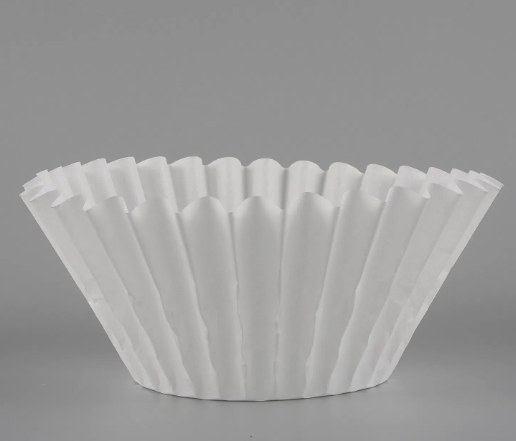
Extra-large basket coffee filters employ a completely different design philosophy. As the name suggests, these filters are designed specifically for basket (flat-bottomed) coffee brewing equipment, with a flat-bottomed cylindrical or slightly curved shallow basket shape. Their diameter is typically between 10-12 cm, and their height is lower (approximately 3-5 cm). This design allows for a more even flow of water through the coffee grounds, making them particularly suitable for commercial drip coffee makers such as the Bunn or Fetco series.
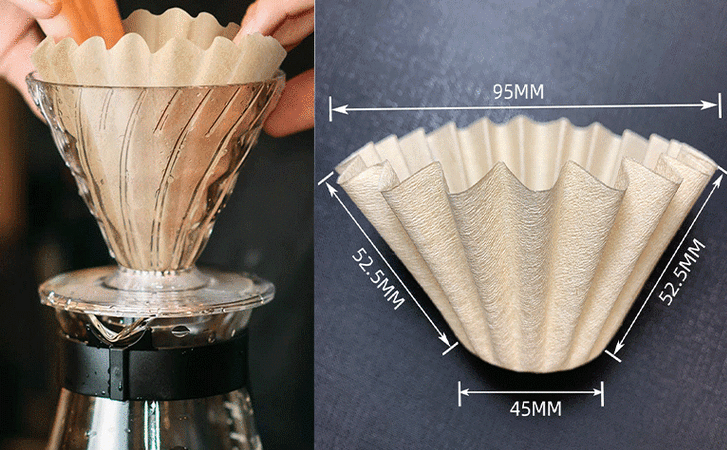
Extra-large commercial coffee filters are usually the largest of the three and are designed specifically for high-capacity commercial coffee machines. These types of filter papers are commonly found in restaurants, offices, and coffee shops, and can brew more than 20 cups of coffee. Their size may vary by brand, but they are typically over 12 cm in diameter and up to 15 cm in height, with a capacity more than twice that of large household filter papers.
Material and Filtration Characteristics Comparison
The three types of filter papers reflect the different needs of their application scenarios in terms of material selection. Large coffee filter papers are mostly made of bleached or unbleached virgin wood pulp paper, with a moderate thickness (approximately 0.2-0.25 mm), balancing filtration efficiency and cost. They effectively filter coffee oils and fine particles while retaining flavor compounds.
Extra-large basket-style coffee filter papers, due to the need to support more coffee grounds and withstand the water pressure of commercial use, typically use thicker, denser pulp materials (0.25-0.3 mm). Some high-end products also add reinforcing fibers. Their structural design must ensure that they maintain their shape after being fully soaked to prevent collapse and obstruction of water flow.
Extra-large commercial coffee filters are the most sophisticated in terms of materials. Besides using high-strength pulp, they may also employ multi-layered composite structures or special coating technologies. These filters require excellent wet strength to maintain their integrity under prolonged brewing and high water temperatures, while maintaining a stable filtration rate and preventing clogging or breakage that could lead to coffee grounds leakage.
Application Scenarios and Brewing Efficiency
From a usage perspective, large coffee filters are primarily aimed at home users and small offices, compatible with most home drip coffee makers. Their brewing speed is moderate, suitable for medium to fine grinds, and can complete filtration within a standard coffee machine cycle (approximately 5-8 minutes).
Extra-large basket coffee filters are specifically designed for commercial basket brewing systems. These systems typically have larger nozzles, requiring filters with more even drainage. The advantage of the basket design is a relatively uniform coffee grounds thickness and consistent water flow path, contributing to balanced extraction. It is particularly suitable for medium to coarse grinds, with brewing times typically controlled at 4-6 minutes for optimal extraction.
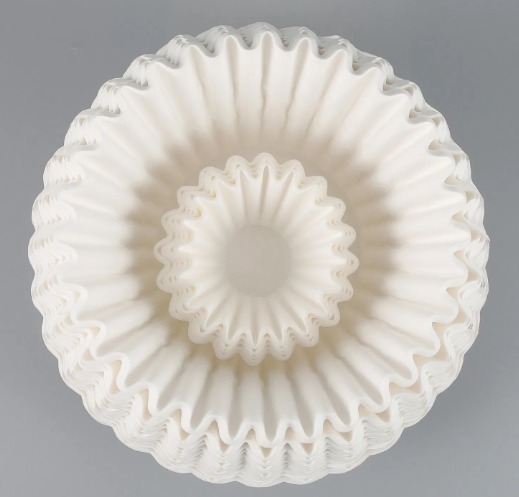
Extra-large commercial coffee filters serve the highest-demand commercial environments, such as 24/7 coffee shops, restaurants, or large offices. These environments require rapid, high-volume coffee preparation; therefore, these filters are designed with extremely high water flow rates, allowing for faster brewing cycles (typically 3-5 minutes for a full pot) while maintaining consistent extraction quality. Many commercial filters also feature special pleats or ribs to ensure adequate space between the filter and the brewing basket, preventing the “suction effect” from affecting extraction.
Cost and Sustainability Considerations
From an economic perspective, large coffee filters are typically sold in 100-sheet packs, resulting in the lowest cost per filter, making them suitable for budget-conscious home users. Extra-large basket coffee filters, due to their thicker material and more complex manufacturing process, are typically 30-50% more expensive per filter than large household filters, but commercial users can reduce costs through wholesale purchases. While extra-large commercial coffee filters have the highest unit price, their high capacity (one brew is equivalent to 2-3 household brews) may result in the lowest actual cost per cup of coffee.
In terms of sustainability, chlorine-free bleached filter paper has become a market trend, and all three types of products offer environmentally friendly options. It’s worth noting that due to the massive usage of commercial filter paper, more and more manufacturers are offering compostable or biodegradable options, some even made from renewable materials such as bamboo pulp or bagasse.
Selection Recommendations:
Choosing the right coffee filter paper requires considering your equipment type, brewing volume requirements, coffee flavor preferences, and budget constraints. For standard home drip coffee makers, large coffee filters are the most versatile and economical choice. If you are using a commercial basket coffee maker (such as the Bunn VPR series), you must choose a special extra-large basket coffee filter paper; otherwise, it may result in poor water flow or filter paper breakage. For high-volume commercial environments, extra-large commercial coffee filters will provide optimal efficiency and reliability.
Regardless of the type of filter paper chosen, pretreatment (rinsing with hot water) removes any potential pulpy taste and helps the filter paper adhere to the brewing basket. Matching the correct coffee grind size is also crucial—home filter paper is suitable for medium-fine grinds, while commercial basket filters typically require a medium-coarse grind for optimal extraction.
0 Comments