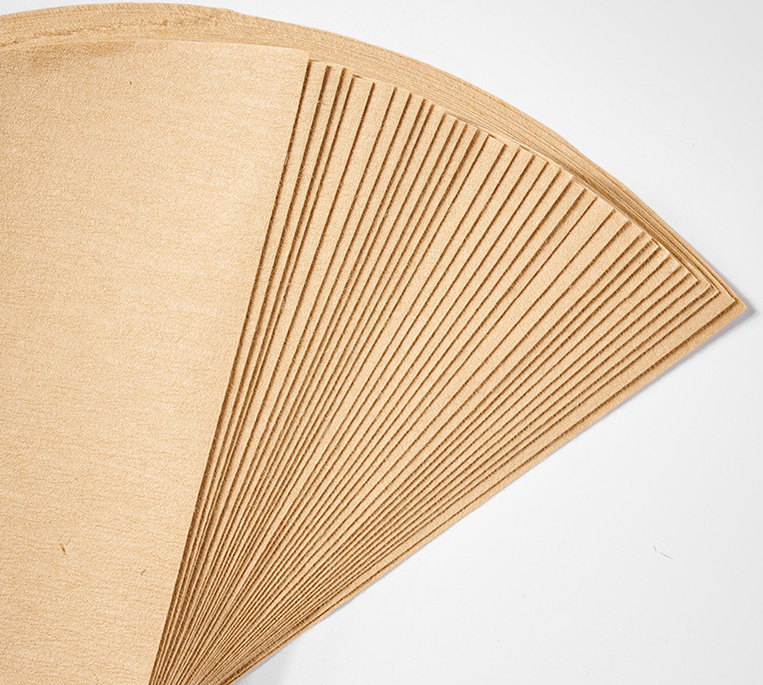
1. Compatibility & Sizing: The Right Fit for Your Brew
Getting the right size filter is crucial for optimal extraction and preventing overflows or weak coffee. The “number” system can be confusing, but understanding the basics will ensure a perfect fit every time.
Q: “What size filter do I need for an 8-cup coffee maker?”
A: For most standard 8-cup automatic drip coffee makers, you’ll typically need a #4 cone filter or a standard flat-bottom basket filter, depending on your machine’s design. Always check your machine’s manual for the precise recommendation.
Q: “What is the difference between #2 and #4 coffee filters?”
A: The main difference lies in their size and the brew volume they are designed for.
| Industry Designation | Machine Capacity | Height (mm) | Best Use Case |
| #1 / Size 01 | 1-2 Cups | $70mm$ | Single-serve pour-over, small drippers |
| #2 / Size 02 | 2-4 Cups | $100mm$ | Manual drippers (e.g., Hario V60 02), smaller automatic brewers |
| #4 / Size 04 | 8-12 Cups | $125mm$ | Standard home automatic drip brewers, larger pour-overs (e.g., Chemex 8-cup) |
| #6 | 10+ Cups | $150mm$ | Large batch commercial brewers, industrial applications |
Q: “Can I use a cone filter in a flat-bottom basket machine?”
A: While physically possible, it’s generally not recommended. Cone filters are designed for a specific water flow path that allows for a more even extraction in cone-shaped brewers. Using them in a flat-bottom basket can lead to uneven saturation, bypass (water flowing around the coffee grounds), and a weaker, under-extracted brew.
Q: “Will V60 filters work in a Chemex or a Moccamaster?”
A:
- V60 filters in a Chemex: No. While both are cone-shaped, Chemex filters are significantly thicker, larger, and have a different fold pattern designed for their specific brewing method and desired cup clarity. V60 filters would allow too much bypass and sediment.
- V60 filters in a Moccamaster: No. Moccamasters typically use #4 cone filters or specific Moccamaster brand filters which are larger and have a different flow rate than V60 filters.
2. Flavor & Performance: Brewing the Perfect Cup
The filter paper’s material, thickness, and structure play a crucial role in the final taste profile of your coffee.
Q: “Why does my coffee taste like paper, and how do I stop it?”
A: A papery taste, often described as woody or slightly bitter, is common with new paper filters. This is due to residual paper fibers or compounds.
- Solution: Always rinse your filter paper with hot water before adding coffee grounds. This pre-wetting not only eliminates the papery taste but also pre-heats your brewing equipment, ensuring a more stable brewing temperature.
Q: “Should I rinse my filter paper with hot water before adding coffee?”
A: Yes, absolutely. This step is critical for two main reasons:
- Removes papery taste: Washes away any loose paper fibers or manufacturing residues.
- Pre-heats brewer: Brings your brewer and server up to temperature, preventing heat loss that can lead to under-extraction and a weaker, less flavorful cup.
Q: “Does bleached (white) vs. unbleached (brown) paper affect the taste?”
A: In the past, poorly bleached filters could impart a chemical taste. However, with modern processing:
- Core Statement: Modern white filters utilize Oxygen-Bleaching or TCF (Totally Chlorine-Free) processes, ensuring a dioxin-free byproduct. These methods are taste-neutral.
- Practical Impact: For most palates, there is no discernible taste difference between properly rinsed bleached and unbleached filters. The primary difference is aesthetic and environmental (see below).
Q: “Why is my coffee draining so slowly? Is the filter clogged?”
A: Slow drainage can be caused by several factors related to your filter:
- Grind Size: If your coffee grounds are too fine, they can clog the filter’s pores.
- Filter Type: Some filters are denser (e.g., specific pour-over filters like Chemex) and naturally drain slower.
- Overdosing: Too much coffee can create a thick bed that impedes flow.
- Water Quality: High mineral content in water can leave residue that clogs filters over time, though this is less common with paper.
Q: “How do filter papers affect cholesterol compared to metal filters?”
A: This is a significant health benefit of paper filters.
- Core Statement: Premium paper filters function as depth filters with a nominal pore size ranging from 10 to 20 micrometers ($μm$).
- The Data: This rating is engineered to trap 99% of diterpenes (cafestol and kahweol), which are the oils responsible for raising LDL (“bad”) cholesterol, while allowing $H_2O$-soluble flavor compounds to pass. Metal filters, with their larger pores, allow these diterpenes into your cup.
| Filter Material | Pore Size (μm) | Resulting Cup Profile | Diterpene Retention |
| Standard Paper | $10-20$ | Crisp, high clarity | $99.9\%$ |
| Cloth (Cotton) | $20-50$ | Syrupy, high body | $~90\%$ |
| Metal Mesh | $50-100$ | Bold, textured | Minimal (allows passage) |
3. Sustainability & Maintenance: Responsible Brewing
For the eco-conscious coffee drinker, filter choice extends beyond the cup to the planet.
Q: “Are coffee filters compostable or biodegradable?”
A: Yes, most paper coffee filters are 100% compostable and biodegradable.
- Core Statement: Unbleached filters are 100% compostable and certified under EN 13432 for industrial and home composting.
- Recommendation: Check for certifications like the FSC (Forest Stewardship Council) logo, which indicates responsible sourcing. Ensure your filters don’t have plastic linings if you plan to compost them. The spent coffee grounds are also excellent for composting!
Q: “Can I reuse a paper coffee filter more than once?”
A: While technically possible, it is generally not recommended for optimal flavor or hygiene.
- Flavor: Reused filters will have residual coffee oils and fines that can impart stale or bitter flavors to your next brew.
- Hygiene: Wet paper is a breeding ground for bacteria and mold if not thoroughly dried and stored, which is impractical for a coffee filter.
Q: “What’s better for the environment: oxygen-bleached or chlorine-bleached filters?”
A: Oxygen-bleached or Totally Chlorine-Free (TCF) filters are significantly better for the environment.
- Trust Evidence: Our papers maintain a 0% Elemental Chlorine residue, exceeding ISO 9001:2015 quality management and FDA 21 CFR 176.170 requirements for aqueous and fatty food contact.
- Explanation: Traditional chlorine bleaching (ECF – Elemental Chlorine Free, which still uses chlorine derivatives) can create harmful dioxins. TCF and oxygen bleaching use hydrogen peroxide or oxygen, which break down into water and oxygen, posing no environmental harm. Always look for “TCF” or “Oxygen Bleached” on the packaging.
Q: “Is a permanent metal mesh filter better than paper filters?”
A: It depends on your priorities:
- Environmental: Metal filters are reusable, reducing waste.
- Flavor: Metal filters allow more oils and fine sediment into your cup, resulting in a bolder, more full-bodied coffee with slightly less clarity. This is preferred by some, but others find it muddy.
- Health: As noted earlier, metal filters do not trap diterpenes, which can impact cholesterol levels for some individuals.
- Maintenance: Metal filters require thorough cleaning after each use to prevent oil buildup and rancidity.
Q: “How should I store filters to keep them from absorbing kitchen smells?”
A: Coffee filters are highly absorbent.
- Best Practice: Store them in their original packaging, a sealed container, or a clean, dry cupboard away from strong odors like spices, cleaning products, or cooking fumes. Any absorbed odor will transfer directly to your coffee.
4. “Emergency” Hacks: When You’re Out of Filters
We’ve all been there: morning arrives, and the filter dispenser is empty. Here are some makeshift solutions, with caveats.
Q: “What can I use as a substitute for a coffee filter?”
A: If you’re truly desperate, here are a few options, listed from best to worst:
- Clean Cloth: A clean dish towel, cheesecloth, or even a new sock can work. Line your dripper, add grounds, and pour slowly. Expect some sediment.
- French Press Method (without the press): Put grounds directly into your mug, add hot water, let steep, then carefully pour through a fine-mesh sieve into another mug.
- Paper Towel: See the next question.
Q: “Is it safe to use a paper towel as a coffee filter?”
A: In a pinch, yes, but with caution.
- Safety Concerns: Most paper towels are not designed for food contact when wet and hot, and some may contain chemicals, dyes, or scents that could leach into your coffee. They also tend to break down easily when wet, leading to grounds in your cup.
- Best Practice: Use an unbleached, plain white paper towel (avoid printed or scented ones). Fold it multiple times for strength, and rinse it thoroughly with hot water before adding coffee. Expect a much slower drip and potentially more sediment. This is a last resort!
Choosing the right coffee filter paper is an intentional act that elevates your brewing experience. By understanding the science and sustainability behind these essential tools, you can consistently achieve a cleaner, healthier, and more delicious cup of coffee.
Every exquisite cup of coffee starts with a simple, often overlooked component: the filter paper. Far from being a mere paper circle, your filter choice profoundly impacts everything from flavor clarity and machine compatibility to your environmental footprint. This guide dives deep into the world of coffee filters, answering your most pressing questions with expert insights and hard facts.
0 Comments