The Purpose of Pre-wetting
The common practice of pre-wetting filter paper is a direct application of controlling variables in coffee brewing. Advocates generally highlight three key benefits for this step.
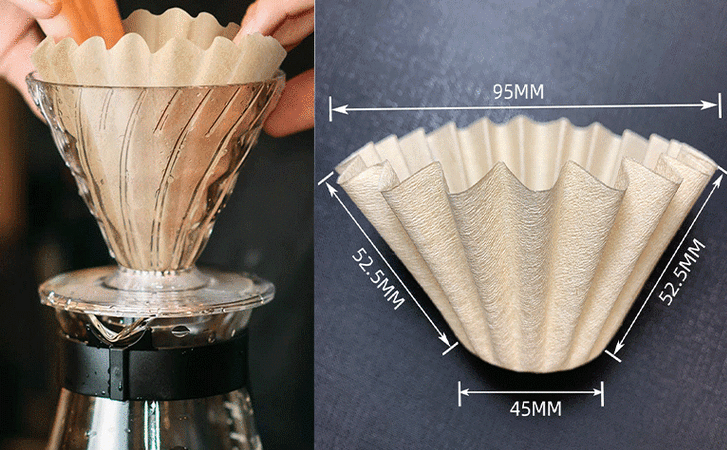
Removing Unwanted Paper Tastes
Firstly, pre-wetting aims to remove potential “cardboard tastes.” Dry filter paper can contain residues from processing, such as lignin byproducts or bleaching agents. Consequently, these can impart an unpleasant paper flavor, interfering with the coffee’s pure taste.
Stabilizing Brewing Temperature
Secondly, this step is crucial for temperature stability. Pouring hot water into a cold dripper can cause a significant heat loss. Pre-wetting effectively preheats the equipment, which maintains a stable extraction temperature. This stability is vital for precise flavor control.
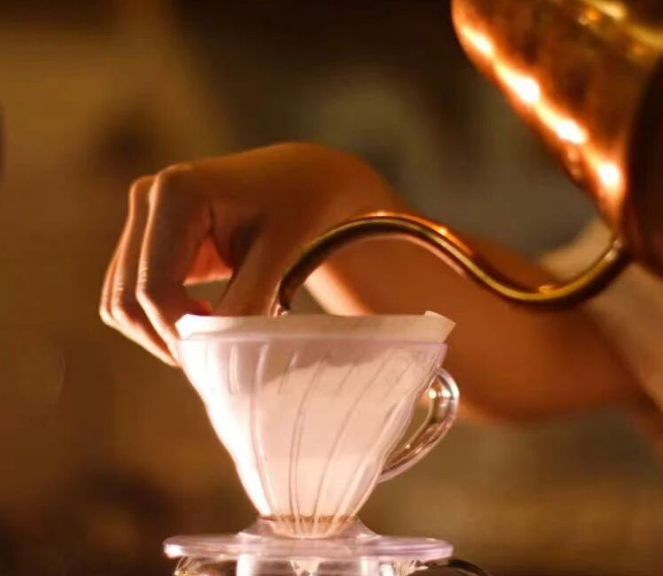
Ensuring Even Water Flow
Finally, pre-wetting optimizes the filter paper’s fit. Dry paper may not adhere perfectly to the dripper walls, potentially creating gaps. As a result, water can “short-circuit” through these gaps, leading to uneven extraction. Wetting the paper improves its contact, however, promoting a more even flow.
What Research Reveals
A 2020 study in the Journal of Food Science offers insight. It found that pre-wetting high-quality bleached filters reduces paper flavor compounds by about 85%. Importantly, the sensory impact on the final coffee was often negligible due to modern bleaching methods. Conversely, natural wood filters retain more lignin, making pre-wetting far more beneficial for them.
The Critical Role of Temperature
In fact, the thermal impact of pre-wetting is particularly significant. German coffee experts have measured this effect. For instance, an unheated ceramic V60 caused a water temperature drop of 7.2°C on the first pour. After preheating, however, the drop was only 2.1°C. Since each 1°C change alters extraction by roughly 0.3%, this difference directly affects the balance of acidity, sweetness, and bitterness.
Visualizing the Improvement
High-speed footage provides further evidence. With dry paper, the first pour often shows a “channeling effect,” where about 15% of water bypasses the coffee grounds. Pre-wetting improves water distribution uniformity by approximately 22%. Therefore, while subtle for a daily cup, this difference matters in precision-focused settings.
Finding Your Preference
Perhaps the best answer lies in your own cup. Consider a simple comparison test: brew one cup with pre-wetting and one without. Ultimately, your taste buds will be the final judge.

0 Comments