The untapped potential of coffee filter paper in specialty coffee brewing—it not only filters coffee grounds but also plays a crucial role in shaping the flavor profile of coffee.
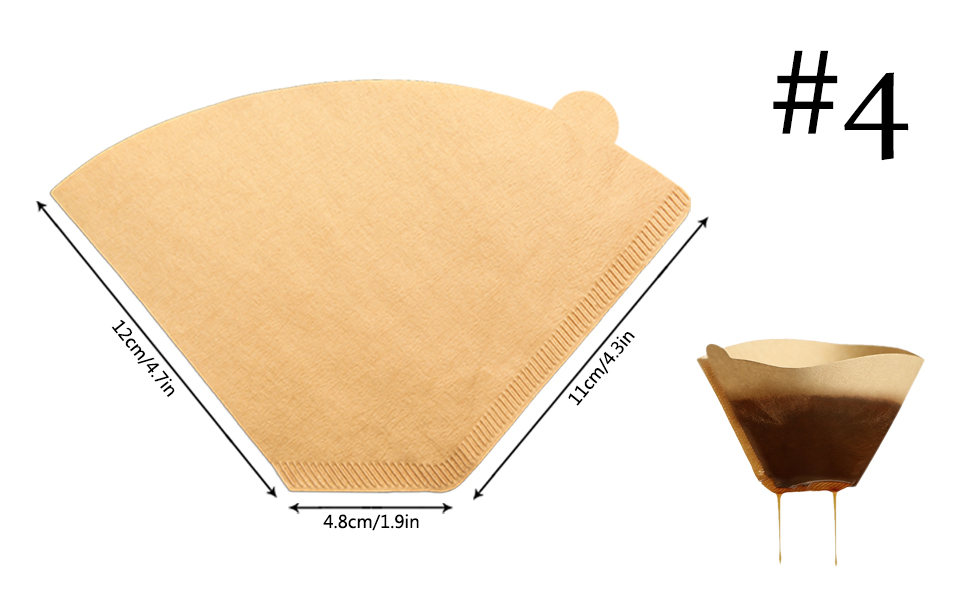
Professional brewing tests, from a laboratory perspective, yielded the following key findings:
I. The Relationship Between Filter Paper Structure and Extraction Uniformity
- Pore Uniformity Comparison: Under a microscope, common filter papers exhibit significant uneven pore distribution.
While some filter papers known for their “cleanliness” have relatively regular structures, variations still exist.
The tested filter paper, even at 500x magnification, still displayed a highly uniform fiber arrangement, theoretically enabling more even water flow and extraction. - Surface Smoothness and Flow Rate: The tested filter paper, made of composite plant fiber, had a noticeably smoother surface.
A smooth surface reduces friction and adhesion to coffee grounds, thus improving water flow efficiency.
II. Influence of Flow Rate Testing and Extraction Time:
Under identical conditions of coffee beans, grind size, water temperature, filter cup, and pouring technique:
Comparison at the Same Pouring Rhythm: The tested filter paper finished extraction earlier than a conventional fast-flow filter paper.
The water flow curve shows that the test filter paper maintained a faster flow rate throughout the process.
Adjusting the water flow to achieve the same extraction time:
To match the extraction time of the test filter paper, the water flow to the regular filter paper needed to be stopped earlier.
This indicates that the filter paper itself has become an independent time control variable.
III. Actual Impact on Flavor Expression
Through testing with two different groups of coffee beans:
Light Roast Yunnan Sun-Dried Coffee
Regular Filter Paper: Presents tropical fruit, grape, and almond notes.
Test Filter Paper: Cleaner mixed berry juice notes, bright acidity, and a taste closer to fruit juice.
Light Roast Panama Geisha
Regular Filter Paper: Flavor leans towards dried fruit (such as dried apricots and canned yellow peaches).
Test Filter Paper: Highlights floral, fresh peach, and maltose flavors, with a clearer sweet and sour balance.
IV. Redefining the Role of Filter Paper in the Brewing System
From “Consumable” to “Variable”
Traditional brewing adjustments often focus on grind size, water temperature, and water flow, often neglecting the filter paper.
Experiments show that filter paper can directly influence flavor structure by altering flow rate and extraction uniformity.
Achieving More Efficient Flavor Adjustment
Changing the filter paper allows for adjustments to the body, cleanliness, and flavor profile of coffee without changing other parameters.
Providing baristas with a more refined and faster tool for flavor correction.
Key Conclusions
Structure determines function: The fiber uniformity and surface smoothness of the filter paper directly affect flow rate and extraction uniformity.
Flow rate affects extraction time: Under the same water pour, a faster flow rate shortens the total contact time, potentially preventing over-extraction later in the extraction process.
Adjustable Flavor Direction: The filter paper can be used as an independent variable to adjust cleanliness, acidity, and flavor clarity.

0 Comments