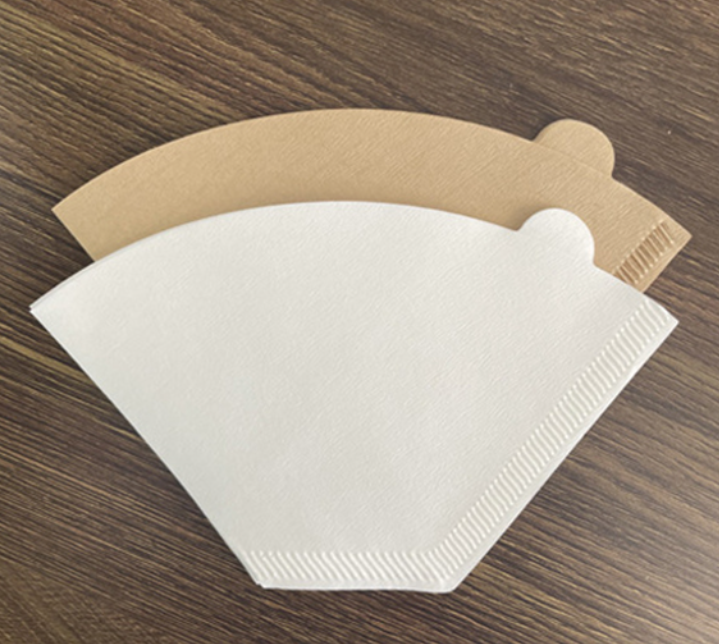
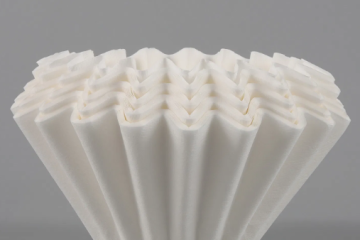
Coffee filter paper alters coffee’s chemical composition through physical filtration. Made of cellulose with 5-20 micrometer pores, it works by size exclusion and adsorption. Unbleached paper, with more lignin, adsorbs more strongly.
Coffee beans contain diterpenoids like cafestol, which raise LDL cholesterol. Filter paper retains 80-90% of these. For example, 150 ml of French press coffee has 6-12 mg, but filtered coffee only 0.1-0.5 mg.
At coffee’s pH of 5.0-6.0, bleached paper adsorbs 60-70% of cadmium ions. Unbleached paper adsorbs 75-85%. Fat-soluble pesticide removal is 50-60%, but water-soluble pesticide removal is low (<30%). Roasting degrades most pesticides; filtration adds extra protection.
HPLC analysis shows filter paper reduces chlorogenic acid by 8-12% and citric acid by 5-8%. Total titratable acidity drops by 0.2-0.3 points. For GERD patients, filtered coffee cuts esophageal acid exposure by 18% on average.
Some beneficial compounds are lost. Total polyphenol retention is 82-88%. Hydroxycinnamic acid retention is 75-80%. Melanoidin retention exceeds 95%. Overall antioxidant capacity (ORAC) retention is 85±5%.
Compliant filter paper meets food contact standards like FDA 21 CFR 176.170 or EU 10/2011. It is bleached with food-grade hydrogen peroxide. Final dioxin levels are below 0.75 pg/g, with no E. coli detected.
In summary, filtration effectively reduces cholesterol-raising substances while keeping most antioxidants.
0 Comments