Why does the thickness of coffee filter paper affect coffee flavor?
The thickness of filter paper directly relates to its fiber density and porosity. Extra-thick paper features lower porosity, which captures over 95% of fine particles smaller than 15μm. Combined with its adsorption of coffee lipids, this process reduces body while brightening acidity.
To preserve more coffee flavor compounds, standard filter paper typically maintains 30–40μm porosity. This allows trace coffee oils to pass through, achieving what we call “balanced extraction.”
Simply put, the paper’s thickness determines how much oil and fine sediment ends up in your cup. This directly influences the body and clarity of the final brew.
We call paper twice as thick as ordinary V60 an “oil blocker.” It filters out most oils and fine particles, trading body for an exceptionally clear, tea-like taste.
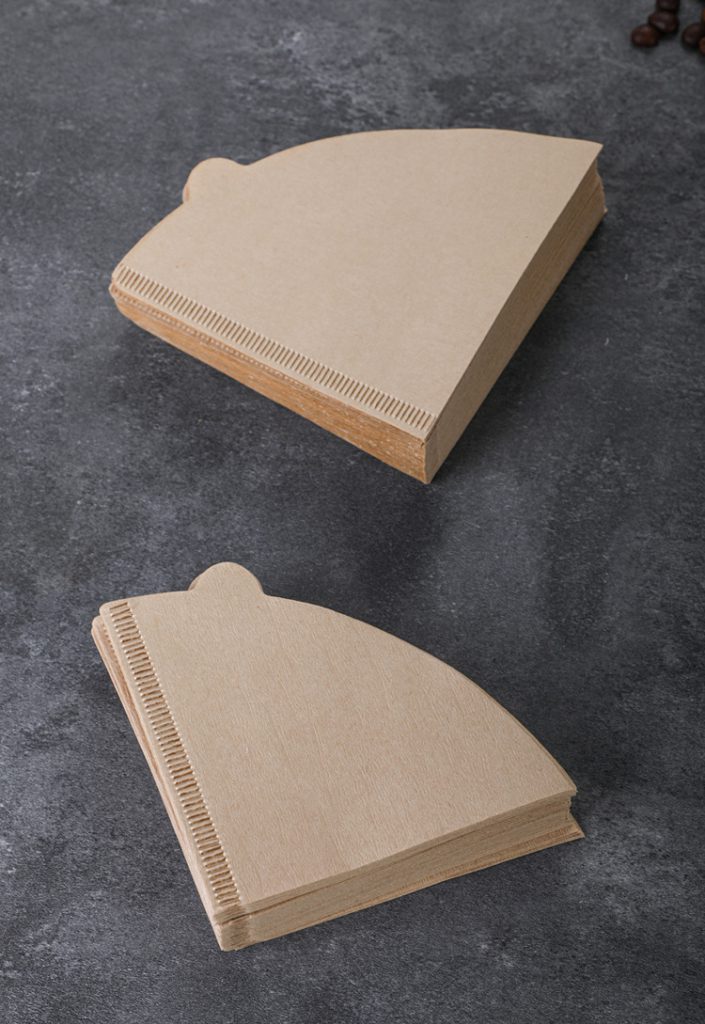
Why Does the Shape of Coffee Filter Paper Affect Water Flow?
If we have to pinpoint how a piece of paper affects coffee extraction, its shape might have some influence. The shape of the filter paper varies depending on the type of filter cup.
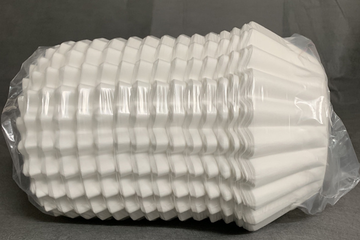
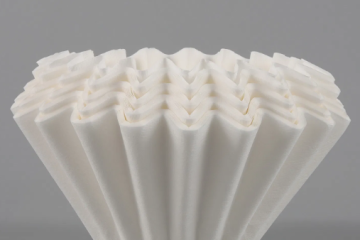
A unique shape is the cake cup filter paper, which has a flat bottom and many wavy pleats. These pleats act as ribs in the filter cup, isolating the cup walls, creating space, and forming a uniform water layer, achieving a similar extraction method to immersion, with a higher tolerance for error.
A more common and widely used type is the V60 conical filter paper. It’s molded exactly to the shape of the filter cup, and its 60° cone angle, when placed in a ribbed filter cup, creates a “funnel effect,” naturally forming an air vent and accelerating water flow (approximately 3.5-4 g/s).
What if you don’t use the filter paper according to its shape? Try using a fan-shaped filter paper.
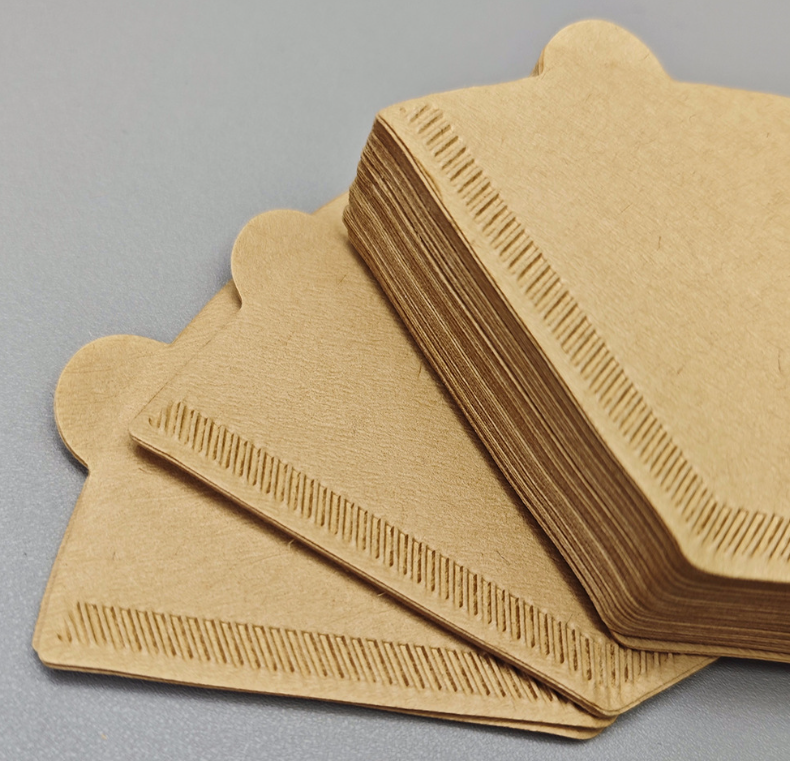
The material of the filter paper might also affect the flavor.
Currently, the most common materials for pour-over filter paper are wood pulp, hemp pulp, and bamboo pulp. Different filter paper materials will affect the acidity and body of the coffee. For example, wood pulp filter paper, made from wood, offers excellent filtration, reducing the passage of fine coffee particles. Hemp pulp filter paper, made from hemp fibers, has a slightly lower filtration efficiency than wood pulp but retains more coffee oils. Bamboo pulp filter paper, made from bamboo, combines the characteristics of both wood and hemp pulp, offering moderate filtration and a balanced flavor profile. In addition to these material differences, there are now bleached and unbleached options. Unbleached filter paper needs to be moistened during brewing to remove any paper pulp taste; otherwise, discerning coffee tasters will definitely detect it.

0 Comments